The complete guide
The Loire riverbanks in Orléans: the complete guide to walks, bridges, boats and viewpoints
Explore central quays, George V Bridge, the market and Parc de Loire, with boat prices, seasonal services, maps and practical walking advice.
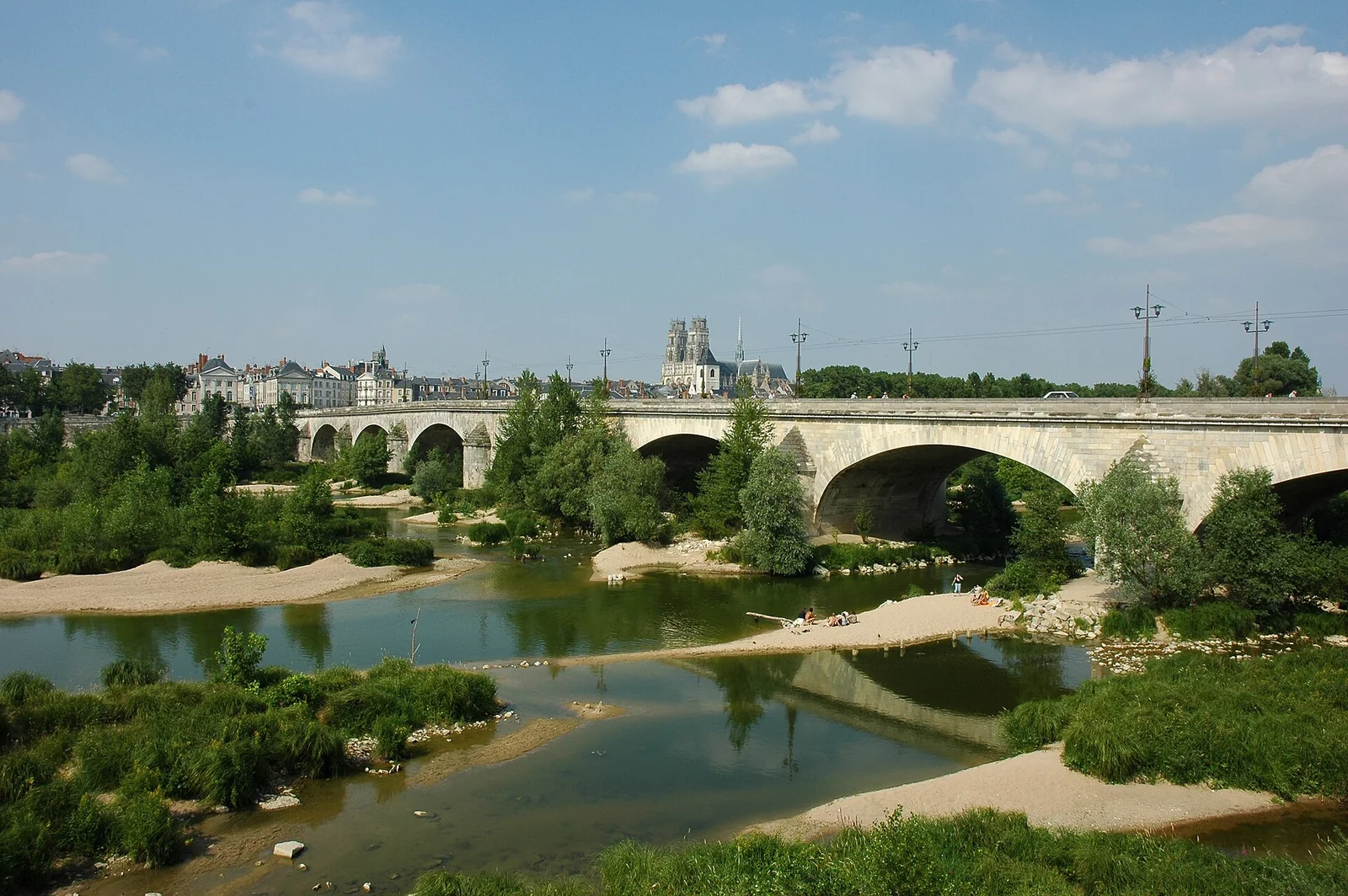
The Loire riverbanks provide one of Orléans’ best changes of pace. A few streets take you from the Old Town to a landscape of bridges, water and sky. The visit can be a half-hour pause or a substantial part of a day. The river is not a natural swimming pool or a uniform scenic backdrop, however: levels, paths and available activities change through the seasons.
This guide separates central quays, eastern extensions, the south bank and boat trips. It includes prices actually published for specific products without turning a seasonal service into a year-round promise. Practical information was checked on 10 November 2026. Suggested walking times are editorial advice; navigation and operating decisions remain with the relevant providers and authorities.
1. Choose the walk that suits your day
| Interest | Option | Suggested time |
|---|---|---|
| A first impression | Central quays and George V Bridge from the north bank | 30–60 minutes with stops |
| A relaxed walk | Quays and return through Châtelet | About 90 minutes, depending on pace |
| Market and landscape | Quai du Roi extension on Saturday morning | A flexible half-day |
| Nature and leisure | Parc de Loire with transport planned | Several hours |
| A view from the water | A reserved boat product | Published trip time plus boarding margin |
For a first visit, begin simply: centre, river and return. Add a crossing or extension only when weather and energy make it attractive. The three-day itinerary places the river after indoor visits to vary the experience without filling the day with unnecessary journeys.
2. Understand the river’s role before treating it as scenery
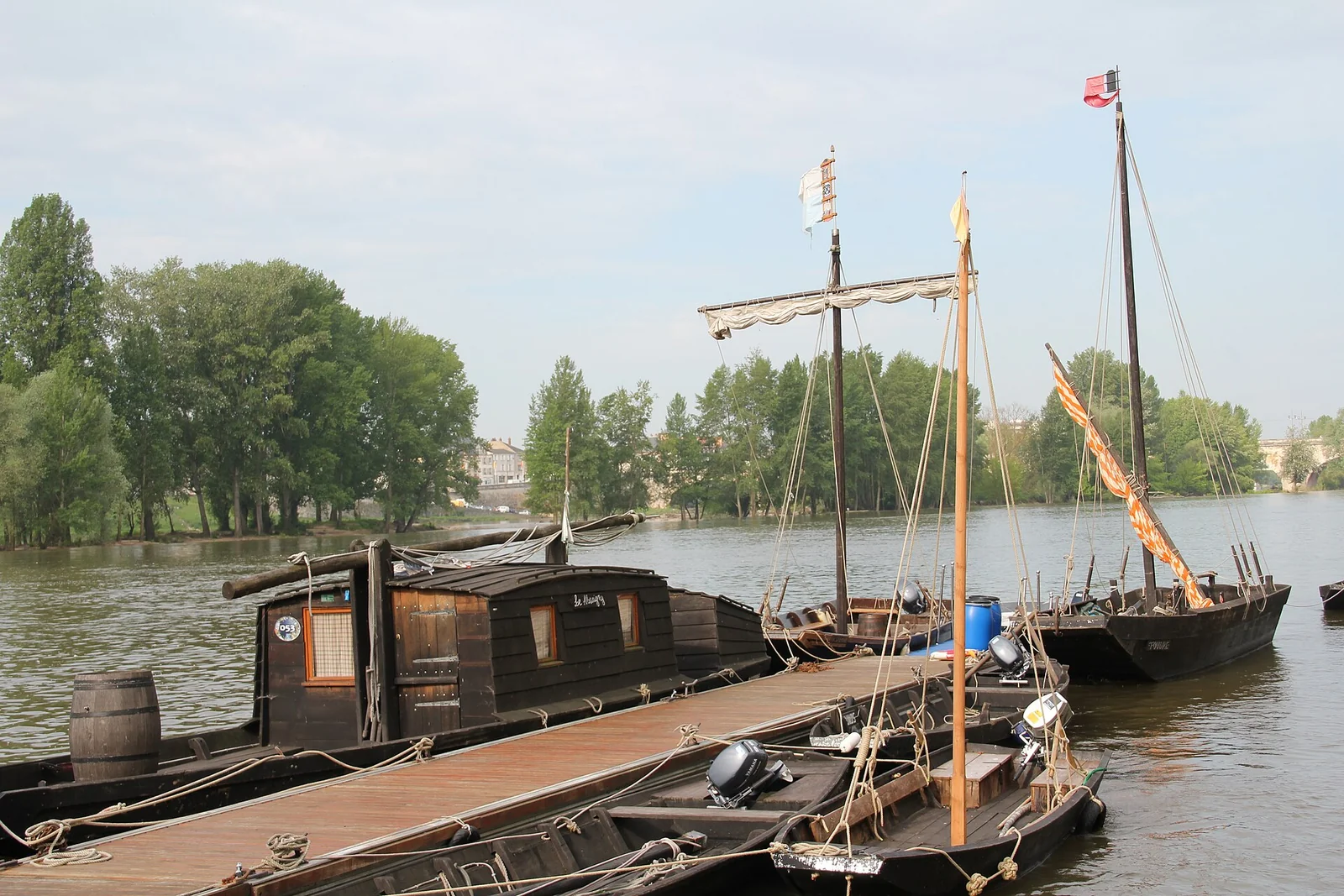
The Loire long organised trade at Orléans. Quays, descending streets and commercial spaces are connected parts of a history of movement. The municipal Orléans through the centuries publication explains the relationship between goods, workshops and the changing city.
This history should not become only a picturesque story of old boats and local delicacies. Some commerce linked Orléans to wider colonial circuits, while industrialisation and rail changed the balance of transport. Today’s riverfront results from those transitions as well as from earlier port life. Contemporary improvements have given new uses to spaces once focused on work and the movement of goods.
The UNESCO Loire Valley property is described as a cultural landscape shaped by interaction between people and their environment. That idea changes how you look. The interest is not only a handsome view but the bridges, settlements, cultivated land and practices that have formed the valley over time. You can see a small part of that larger story simply by watching how the streets meet the river.
3. Central quays: the best starting point
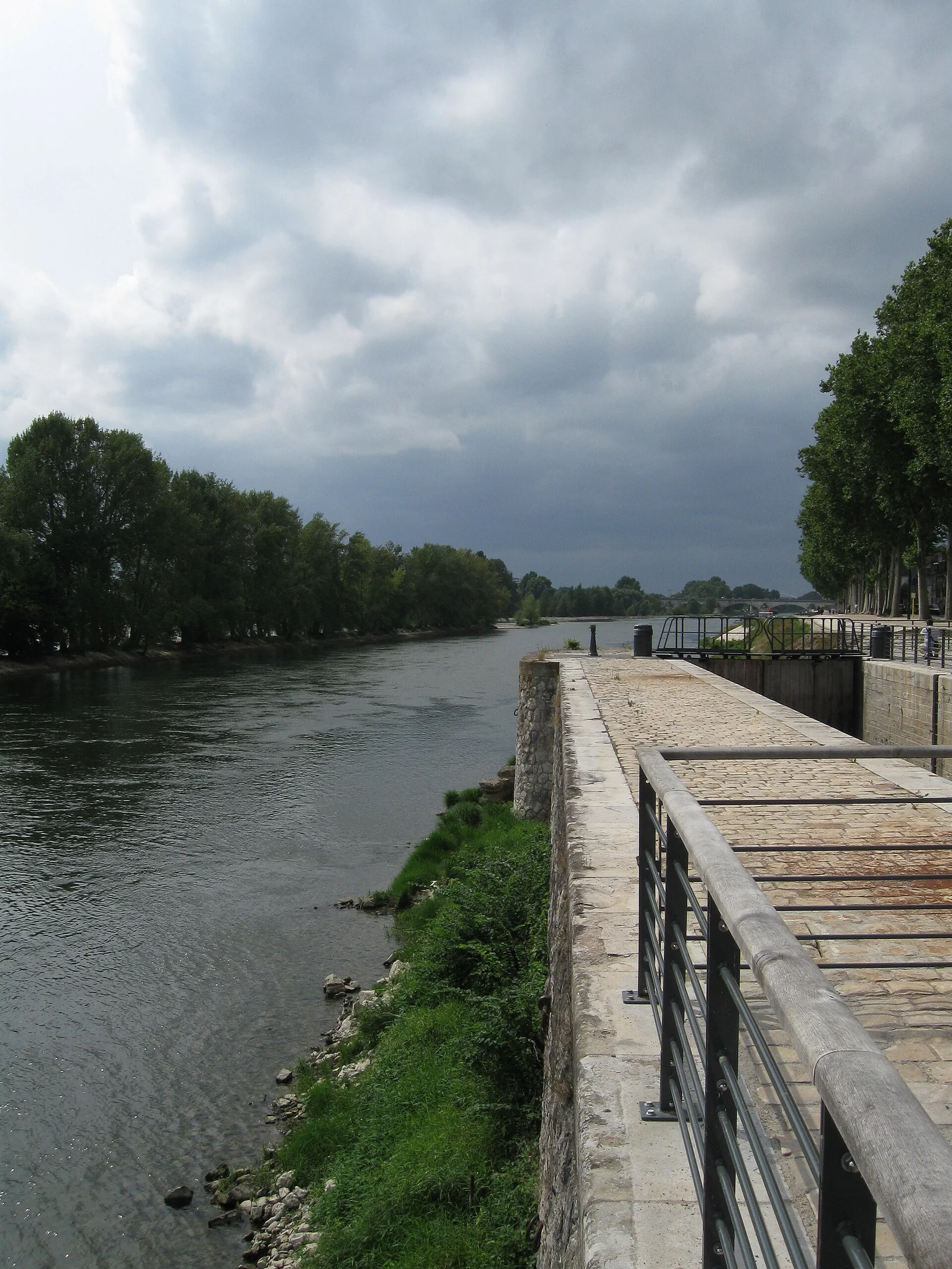
Reach the river from Châtelet or the historic centre. Before following the bank, identify George V Bridge, the opposite shore and the route back. This short orientation pause prevents a long walk in one direction when some people only wanted a brief break. Read temporary notices too: lower sections may be closed while an upper route remains available.
Not every stretch has the same comfort or surface. Some places are exposed, near movement routes or less even underfoot. For a straightforward first outing, use the prepared paths and remain willing to return through the city. A satisfying river walk does not require staying at the closest possible distance to the water at every moment.
With limited time, select three observations: bridge, city frontage and a detail associated with river activity. Then return using the Old Town circuit. This combination makes more sense than drawing an artificial line between “heritage” and “nature”, since the two are especially closely connected here.
4. George V Bridge: observe, compare and cross if you wish
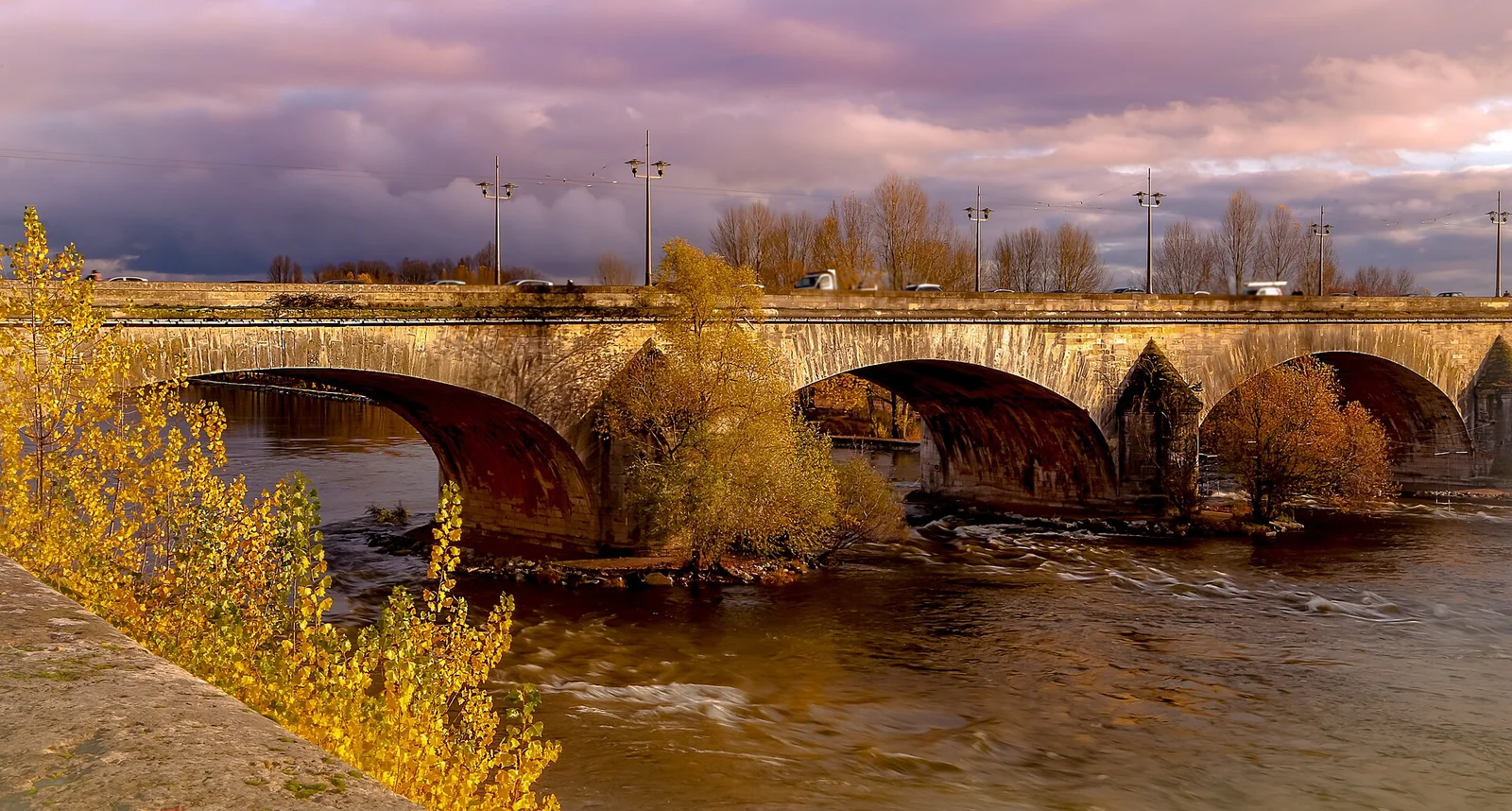
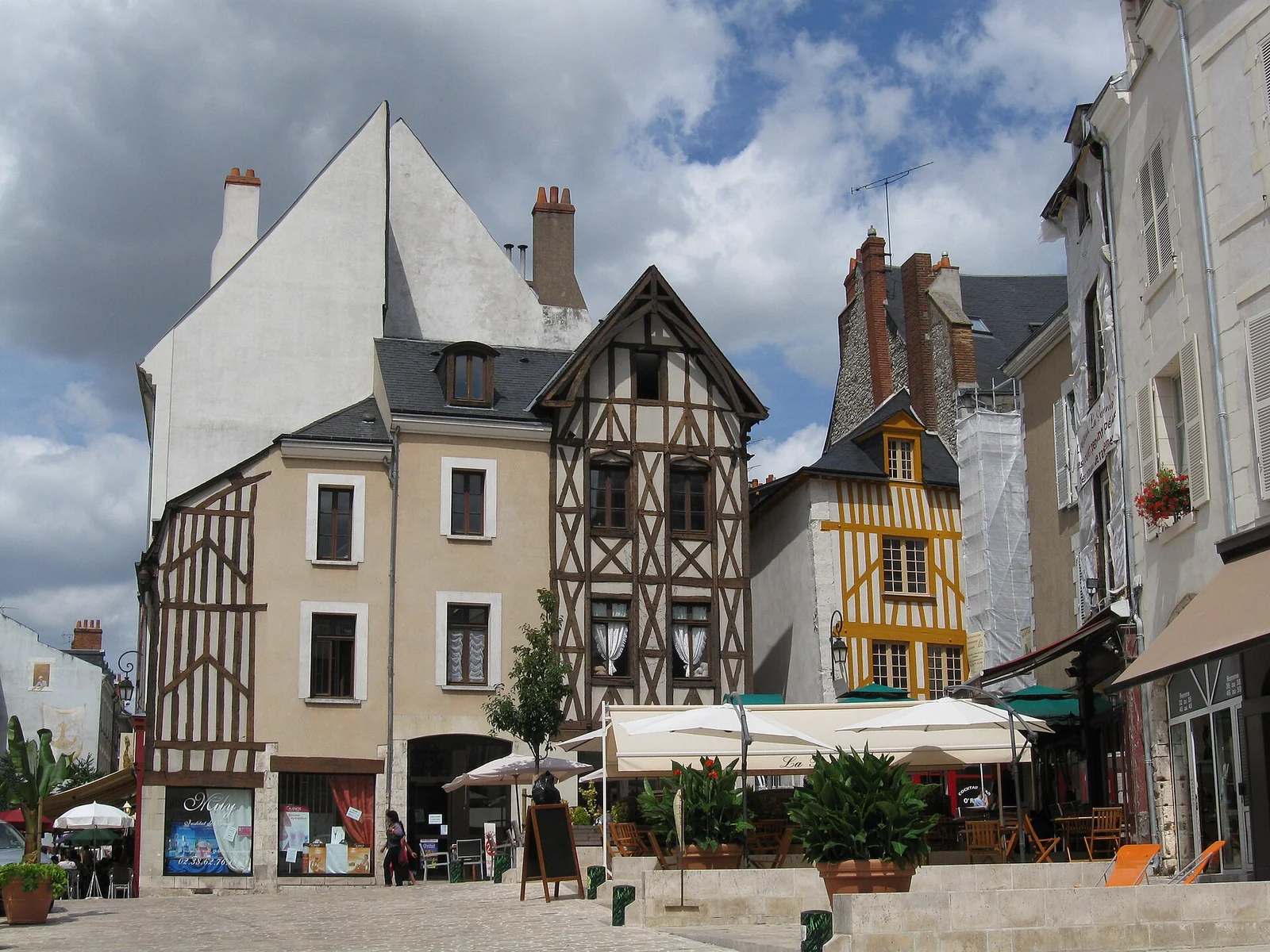
George V Bridge is a major part of the skyline. Look at its arches and its relationship with the Loire before deciding to cross. The current bridge belongs to the major eighteenth-century improvements; it is not Joan of Arc’s intact 1429 crossing. The Loiret tourism bridge guide helps place different structures and periods in context.
For photographs, vary distance from an authorised area. A close view of an arch tells a different story from a panorama including the city. Reflections depend on water level, wind and light, so waiting for perfect symmetry may achieve little on a moving river. The variations are part of the subject rather than defects that the landscape should remove.
Crossing can provide another angle on Orléans but remains optional. Respect designated movement space, rails and local instructions. With children, agree where to stop before taking out the camera. In strong wind or with a tired group, the central bank is enough. You can understand and appreciate the bridge without making its crossing the test of a successful visit.
5. Towards Quai du Roi and the Saturday market
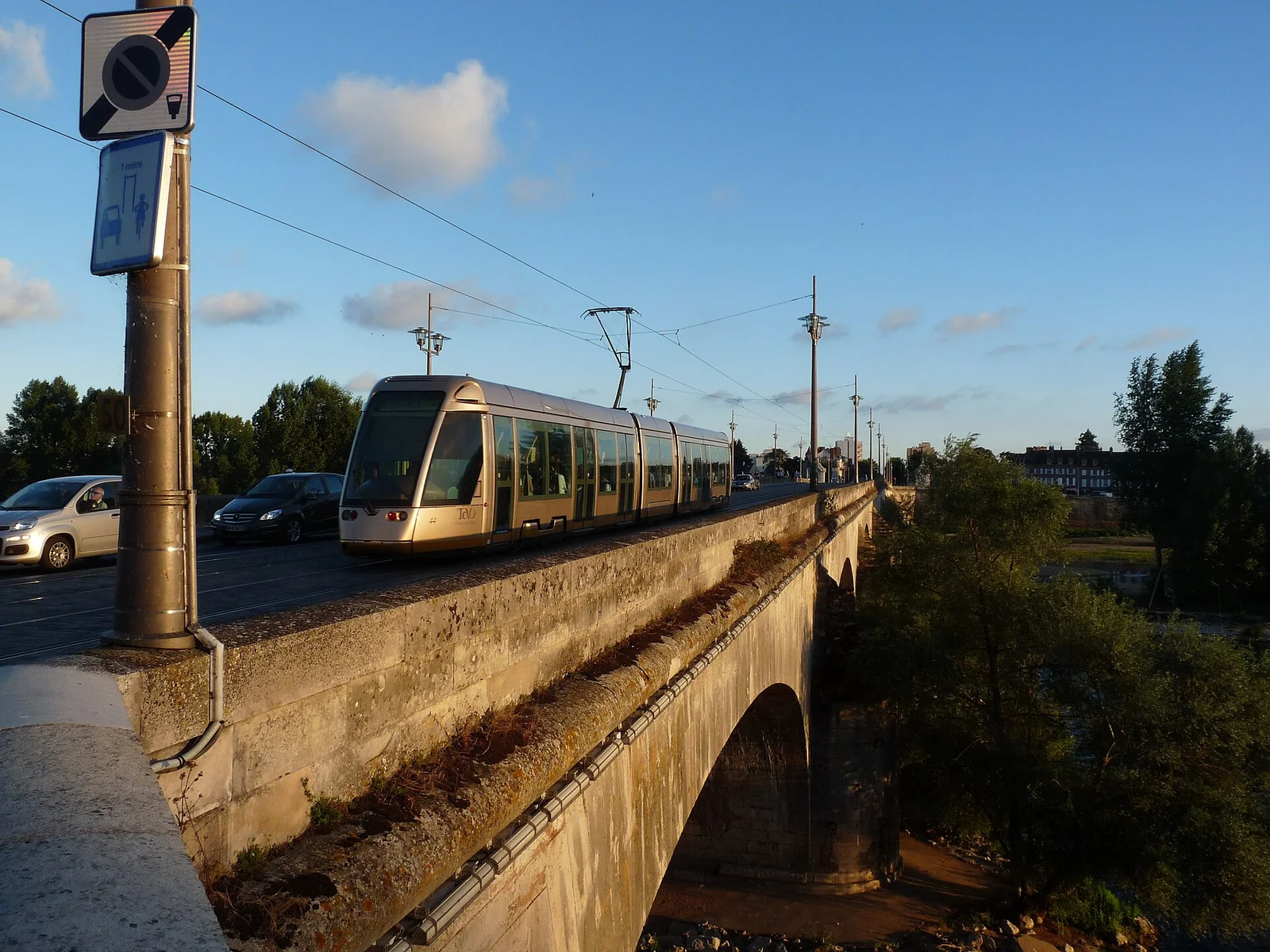
The eastward extension suits visitors who enjoy combining walking and everyday city life. The municipal market page lists the Quai du Roi market on Saturday mornings from 7.30 am to 12.30 pm. Decide on it before giving the whole morning to a museum. Arriving early in the afternoon because you only remembered “Saturday market” may mean missing the main activity.
Look at products and ask where they come from rather than assuming everything is produced within the city. Markets bring together producers, traders and different specialities. If buying for a picnic, consider transport and suitable storage rather than carrying delicate food through several hours of visits without a plan.
Afterwards, return slowly or continue according to the conditions. Do not add a major excursion only because you are already beside the river. The food guide covers the halls and other ways to discover Orléans’ products. A seated meal or warm drink can be a better choice than an improvised cold-weather picnic.
6. South bank and Parc de Loire: a separate scale of outing
Parc de Loire is a larger outing than a short central-quay stroll. The metropolitan page describes a Fil de Loire extending for roughly 7 km with different areas for landscape, leisure and movement. That figure concerns an overall development; it does not mean every visitor must walk the whole distance or that every activity runs continuously.
Choose an arrival point and an aim: a short walk, play area, landscape or a booked activity. Plan the return as well. The official information mentions several access choices, including tramA to Tourelles-Dauphine followed by walking, and seasonal or bookable services. Use the TAO planner for the actual date rather than relying on a summer connection remembered from an old page.
The park combines busy areas with ecological quieter zones. Stay on paths and respect signs instead of treating a peaceful area as permission to explore off-route. On a first city day, this extension can replace another substantial outing. Parc Floral de La Source is a different park again, so keep the names and journeys separate when planning.
7. A boat trip: choose the exact product
Seeing the city from the water changes the perspective, but boat offers are not interchangeable. A thirty-minute sightseeing trip, an aperitif outing and a transport shuttle have different purposes and conditions. Read the exact description, departure point and availability for your date. A product page remaining online does not establish year-round operation.
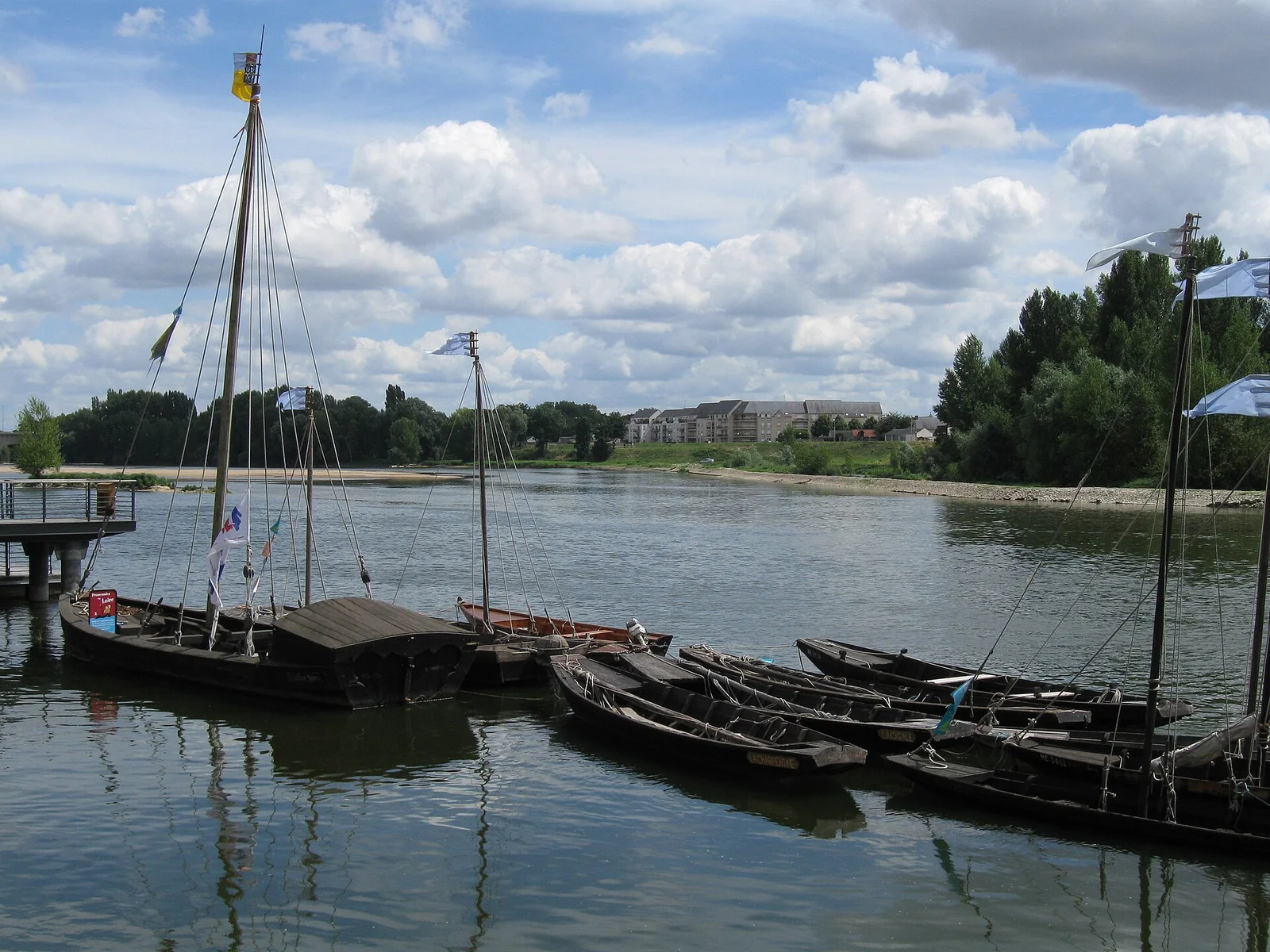
The official thirty-minute trip page describes the traditional boat Evurtius, meeting at Le Ponton on Quai du Châtelet. It lists € 8.50 per adult, € 4 for children aged 3–12 and free travel for under-threes. Every passenger still needs a valid ticket, including children travelling free.
The page requires booking, gives a minimum of two participants for departure and a maximum of twelve passengers. Pushchairs are not allowed aboard, and the product is listed as not accessible to people with reduced mobility. These are planning essentials, not details to discover at the pontoon after making the trip the centrepiece of your day.
8. Booking and the possibility of cancellation
- Select the specific trip and date in official ticketing.
- Add every passenger in the correct category, including free places.
- Read boarding point, duration and access conditions.
- Check pushchair, mobility and animal rules.
- Read cancellation, rescheduling and refund arrangements.
- Save confirmation and allow an arrival margin.
The same page says trips may be cancelled because of bad weather or a low Loire level. Pleasant conditions in the city are therefore not enough to guarantee navigation. Do not decide that a departure should operate simply because a boat is moored nearby. The organiser makes the decision according to the activity’s conditions and safety requirements.
Keep a nearby substitute: upper-bank walking, a central café or an open indoor visit. For a tightly scheduled day, treat the boat as important but replaceable rather than the sole reason for coming. CityPass holders should check the exact benefit and validation procedure. An inclusion symbol does not automatically reserve a seat at the desired time.
9. BatOLoire: a seasonal shuttle, not an all-year bridge
BatOLoire is distinct from the thirty-minute sightseeing trip. The metropolitan 2026 announcement describes a connection from Cabinet Vert to Parc de Loire between 9 May and 30 August 2026, with operating days changing during the season. By the 10 November 2026 check, that calendar had finished. It cannot support a promise of November service or identical dates in 2027.
The fare is described as that of an ordinary network journey, or included under the applicable subscription conditions. Capacity is twelve passengers, and reservation is advised. Navigation remains dependent on weather and river level. Read the relevant year’s announcement before building an outward-and-return crossing into the day.
If using a bicycle, check carriage conditions, capacity and the final possible return too. A seasonal boat should not become your only way to collect luggage or reach a station. Prepare a land-based alternative with TAO or choose a walking loop that returns naturally to the starting point. This is particularly important for groups whose members move at different speeds.
10. Swimming, sandbanks and high water
The metropolitan authority states that swimming in the Loire is prohibited. An apparently calm surface does not reveal currents, changing depth or submerged obstacles. Walking beside the river is not permission to enter it. A supervised area in a separate lake is a different facility with its own dates and authorisation.
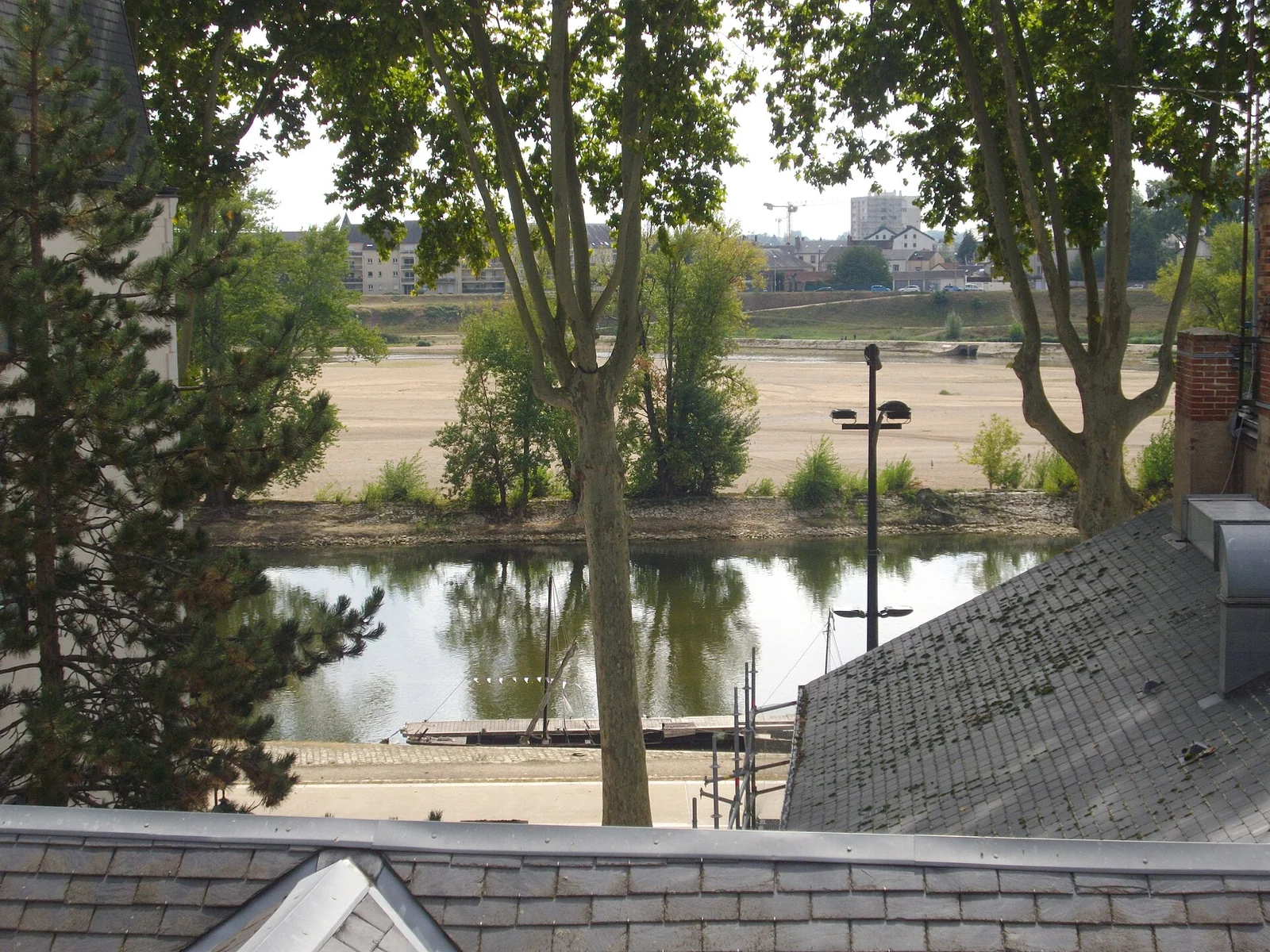
Remain on open routes and respect barriers. A visible sandbank or a dry approach can create a misleading impression of stability. Do not search for a shortcut through the riverbed or encourage children to move closer to the edge for a photograph. Sensible limits should be part of the walk rather than an interruption added after a risky choice.
During high water, consult Vigicrues and local notices. A national warning does not replace instructions on site. Equally, the absence of a dramatic national alert does not guarantee every low path is usable. If a section is closed, return through the city or choose a more distant viewpoint. There is always another way to look at the Loire.
11. Walking and cycling: share the quays clearly
The riverbanks support several uses. Where routes are shared or close together, keep movements predictable, look before stopping and avoid spreading a whole group across the path for pictures. On a bicycle, slow according to conditions and dismount where appropriate. A well-known cycle route does not turn every city space into a priority sports lane.
For a longer ride, use official Loire à Vélo information and check diversions, surfaces and the return. An app’s travel time excludes much of what shapes a day: stops, wind and ability. With a rented bike, read the return deadline and the conditions for accessories or mechanical problems before setting out.
This urban walk is not a technical cycling itinerary. You can explore the centre on foot and reserve another period for riding. Separating the activities avoids combining monuments, food, a long ride and equipment return in a day that becomes unnecessarily rushed. The river remains enjoyable when you choose only one way of experiencing it at a time.
12. Photography without chasing a single magic hour
Light matters, but no single time works for every picture. Morning, evening, cloud and a passing bright interval all create different scenes. Decide what interests you first: bridge arches, skyline, boat or quay detail. Then choose an authorised angle that suits the subject instead of following a prescribed photo spot regardless of conditions.
For variety, take a broad view, a composition with a nearby element and a detail. Ten almost identical panoramas rarely add much. Reflections move with the water, so a photograph showing the river’s motion can be more interesting than waiting a long time for perfect symmetry.
If staying until evening, prepare the return and the light conditions on your route. A comfortable daytime section may feel different after dark. Do not descend to a low access merely to reproduce a photograph found online. Images should preserve the pleasure of the outing rather than pull you away from the place’s actual conditions.
13. Children, pushchairs and mobility requirements
Choose a starting point that is easy to find again and a walking duration suitable for the group. With younger children, use a few clear stops and maintain distance from the edge. Watching bridges, boats and birds can be a complete activity without needing a playground every few minutes. Do not approach birds or vegetation zones for a closer photograph.
With a pushchair or wheelchair, check before descending to a low section. Comfortable surfacing on one stretch does not guarantee continuity along the entire walk. Prepare a return by a simpler street where necessary. Boat access is product-specific: the consulted Evurtius trip prohibits pushchairs aboard and is listed as not accessible for reduced-mobility passengers.
Comfort also depends on practical services: toilets, seating, food and the ability to return. Identify them without assuming a seasonal terrace opens throughout the year. In November, going back into the centre for a warm pause may be the best way to extend the day. The Old Town loop provides an easy transition between riverside and streets.
14. Food, breaks and a clear budget
Open public-space walking requires no admission ticket. Costs come from transport, food and chosen activities. Separate those items when comparing a free stroll with a paid water-based experience. The specific thirty-minute trip lists € 8.50 adult and € 4 child fares; those are not the prices of every Loire outing or of the transport shuttle.
Guinguettes and terraces contribute to the atmosphere in some periods, but their season and kitchen hours need checking. A business visible in a summer photograph may be closed during your stay. For a meal on a tightly planned day, contact the selected address and keep a central alternative. The food guide helps match the area and type of pause to your plans.
For a picnic, remove rubbish and follow the local rules. Parc de Loire’s good-practice rules prohibit camping, fires and barbecues. A popular natural area is not permission to install any equipment you bring. A light, easy-to-pack break leaves more flexibility and reduces the amount that has to be carried through the rest of the day.
15. Adapt the outing to the season
In spring, confirm that water-based activities have actually restarted. In summer, carry water, reduce exposure during uncomfortable heat and check seasonal service days. Autumn colour and light can be attractive, while wind and rain may favour a shorter loop. In winter, keep unfamiliar riverside sections in daylight and choose a straightforward return.
If conditions deteriorate, replace an extension with an indoor visit. The cathedral, Museum of Fine Arts or Joan of Arc’s House may work according to their hours. Mondays and public holidays matter: a covered backup needs to be genuinely open, not merely nearby on a map.
Check events for the relevant year. An old poster or preserved festival page does not establish that an activity is happening on your date. The quays remain interesting for their landscape and relationship with the city, so you do not need a spectacular event to justify spending time beside the water.
16. Three practical half-day combinations
First visit: look at Sainte-Croix in the morning, have lunch in the centre, then take a short quay loop with George V Bridge as the turning point. This keeps the river as a change of pace rather than adding another timed appointment. Return through Châtelet if weather makes a longer bank walk unattractive.
Saturday morning: put the Quai du Roi market first, then walk back towards the centre with time for views and a pause. Save a major museum for the afternoon if its calendar suits. Starting the market after a long indoor visit risks reaching it when the morning activity has already finished.
Reserved boat day: build the nearby walking around the confirmed boarding time and leave an uncomplicated substitute. Check messages from the organiser before setting off for the pontoon. If the trip is cancelled, continue with the land-based plan instead of spending the whole afternoon waiting for a decision that may already have been communicated. These combinations are suggested ways to organise attention, not products sold by the city.
17. Map references and departure checklist
Save Quai du Châtelet, George V Bridge, Quai du Roi and Parc de Loire. Check actual access and diversions on the ground; a map pin does not authorise every approach to the bank.
🗺️ Your planning map
Load the map when you need it, or open directions directly. Loading the map connects to Google Maps.
Open in Google Maps ↗- ✅ Weather and river information checked when relevant.
- ✅ Short route and return chosen before departure.
- ✅ Tickets for every passenger on a booked trip.
- ✅ Pushchair, mobility and animal conditions reread.
- ✅ Water, weather protection and suitable footwear.
- ✅ Toilets and a break identified without relying on a seasonal terrace.
- ✅ Land-based alternative to any seasonal shuttle.
18. Observe the living landscape without disturbing it
The river’s interest is not limited to buildings. Vegetation, birds, exposed banks and changing water patterns reward a slower look. Choose a comfortable authorised viewpoint and remain there for a few minutes instead of continually moving closer. Binoculars or a modest camera zoom can make distant observation enjoyable without entering a quiet ecological area.
Do not feed wildlife or collect plants as souvenirs. At Parc de Loire, the official good-practice information asks visitors to keep dogs on a lead and leave plants undisturbed. Follow the signs that apply to the precise area you enter. A path that appears unused may have been left quiet deliberately; absence of a crowd is not evidence that exploration is encouraged.
Notice how the natural and built environments interact. A bank can be managed for movement in one place and left more vegetated in another. A bridge, a mooring point and a riverside path each reveal a human use of the same water. Looking at those differences gives substance to the idea of a cultural landscape without needing to describe every visible feature as either completely wild or entirely artificial.
For a family, use a simple observation list: one moving object, one fixed structure, one plant form and one reflection. Compare what people notice rather than trying to identify every species confidently. If a bird or plant cannot be named from the available view, keep the question for later. The value lies in attention and curiosity, not in adding an uncertain label to every photograph.
19. Official sources for the final check
- Métropole: park access and rules.
- Tourist office: thirty-minute boat trip.
- Métropole:2026 BatOLoire calendar.
- City markets.
- Vigicrues and TAO.
- UNESCO Loire Valley.
Checked on 10 November 2026. Seasonal products and cancellation decisions must be confirmed for the departure you actually reserve.
Frequently asked questions
Is riverside walking free?
Open public spaces need no admission ticket. Transport, meals and water-based products are separate costs.
Can I swim in the Loire at Orléans?
The metropolitan authority states that swimming in the Loire is prohibited. A supervised facility in a separate lake follows its own calendar and rules.
What does the thirty-minute boat trip cost?
The consulted official product lists€ 8.50 adult,€ 4 for ages 3–12 and free under-three travel. Every passenger still requires a ticket.
Can I take a pushchair aboard?
The Evurtius thirty-minute product prohibits pushchairs aboard and is listed as not accessible PMR. Check any different product separately.
Does BatOLoire operate all year?
No. The 2026 announcement gives 9 May–30 August 2026. It does not establish November service or identical future dates.
When is the Quai du Roi market?
The city lists Saturday mornings,7.30 am–12.30 pm. Check exceptional notices if the market is your main reason for going.
Can a boat trip be cancelled in fine weather?
Yes. River level and navigation conditions can cause cancellation independently of how pleasant the weather feels on land.
Must I cross George V Bridge?
No. The central bank already provides varied views. Crossing depends on your preference and the group’s comfort.