The complete guide
Joan of Arc in Orléans: the complete history and walking guide to her House, windows and monuments
Understand 1429 and explore Joan’s House, cathedral windows, public monuments and the Loire, with detailed routes, prices and seasonal exceptions.
In Orléans, Joan of Arc appears in a square, in stained glass, outside a Renaissance mansion and in the names of streets. It can feel as though every representation belongs directly to 1429. The most interesting visit does the opposite: it separates places associated with the events, artworks made much later to remember them, and the celebrations through which the city continues that memory today.
This route provides a historical thread and a practical circuit that can be adapted to your pace. Joan of Arc’s House is the principal indoor stop, but it is not a medieval home preserved untouched. Visitor information was checked on 10 November 2026. Museum hours, holiday exceptions and the celebrations programme should always be checked again for the date of your stay.
1. Choose an outdoor walk, a half-day or a full theme day
| Suggested format | Stops | Planning point |
|---|---|---|
| About 90 minutes outside | Martroi, cathedral exterior, Groslot and the House quarter | No indoor admission essential |
| Half a day | House, cathedral windows and two monuments | Work around the season and screening |
| A thoughtful full day | Add the river and selected museum or documentary material | Allow food, rest and actual opening times |
These are suggested durations rather than official tour lengths. If the House is your priority, start with its hours and organise the rest around them. In low season, a morning of outdoor monuments and Sainte-Croix can precede the afternoon museum opening. On a Monday or a published holiday closure, keep the city route and move the House to another day.
There is no need to make every representation a compulsory stop. Choose a handful that show different ways of remembering Joan. A statue, a window and a multimedia presentation can support a richer visit than a much longer list of objects approached without time to look at them.
2. Why Orléans mattered in 1429
The city stood within a conflict combining warfare between kingdoms, dynastic claims and civil division. The Loire was strategically important: crossings, approaches and supply routes mattered as much as the walls shown in an image of a siege. To understand Joan’s arrival, imagine a network of positions and movements rather than two armies facing one gate.
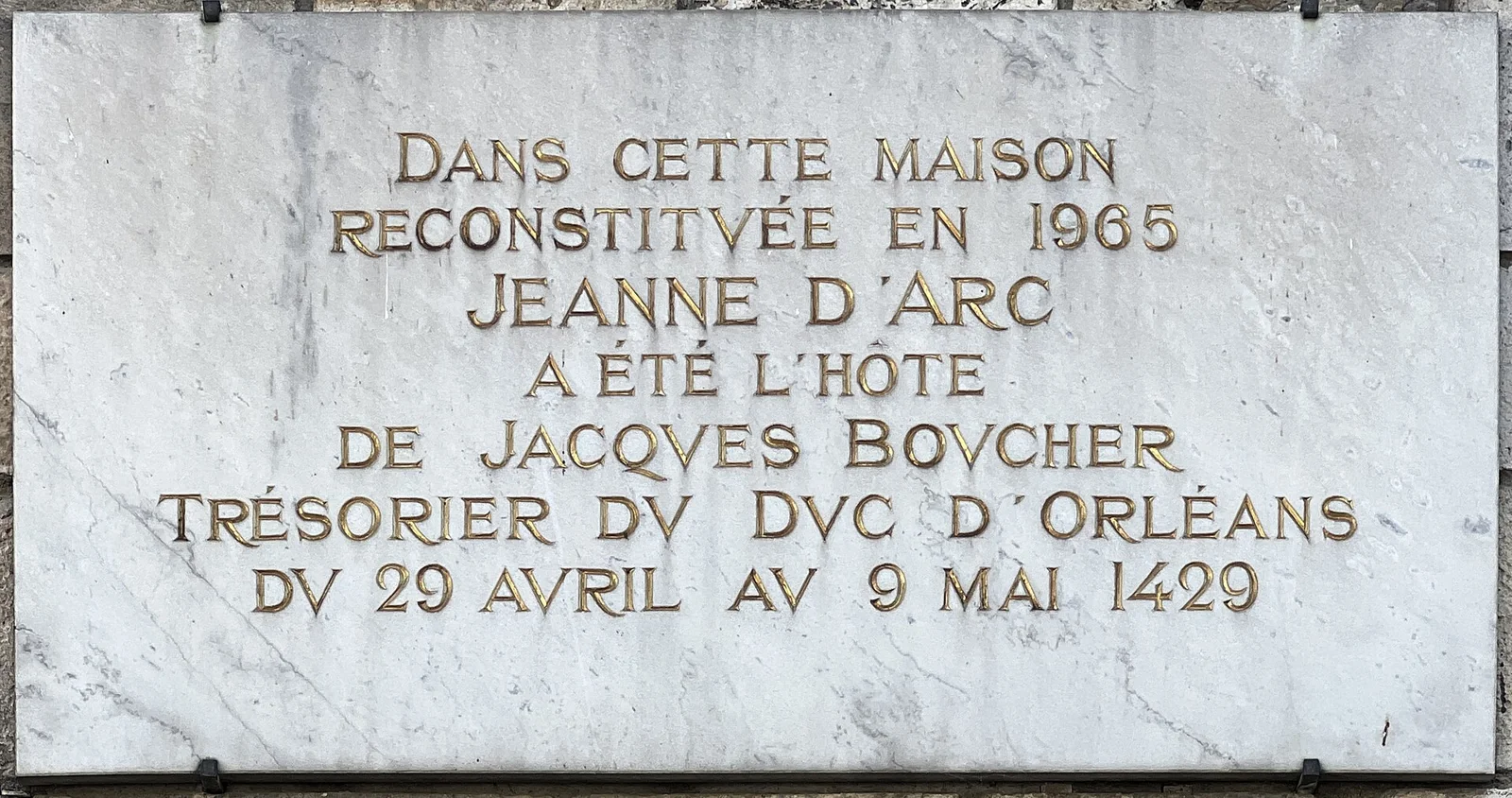
Joan reached Orléans in spring 1429. The city’s House page places her stay with Jacques Boucher between 29 April and 9 May. The relief of the city on 8 May became the central date in local commemoration. The victory should not be reduced to one person acting alone: defenders, commanders, soldiers and inhabitants formed the collective setting that Joan’s figure later came to symbolise.
Remember the sequence before memorising every name: a besieged city, Joan’s arrival, fighting around the positions, the lifting of the siege and the subsequent campaign. A historical plan makes that sequence far easier to understand. The municipal Focus Jeanne d’Arc document supplies context and a city circuit that help relate present monuments to an older geography.
3. After Orléans: keep the stages of her life separate
The title “Maid of Orléans” does not mean that Joan’s entire life unfolded here. The campaign continued after the relief of the city, and Charles VII’s coronation at Reims followed in July 1429. She was captured at Compiègne in 1430; the trial and death took place at Rouen in 1431. Keeping those cities separate prevents a film scene or exhibition image from accidentally relocating an event to Orléans.
The French Ministry of Justice explains the trial’s context and the surviving documentary evidence. A judicial decision, a later rehabilitation and canonisation belong to different moments and frameworks. You do not need to master every scholarly debate for a city visit, but those distinctions make artworks and interpretation much easier to read.
They also explain why representations multiplied long after her death. Different periods emphasised the soldier, believer, civic heroine or national figure. During the walk, ask not only “what event is being shown?” but also “when was this representation made, and for whom?” That is the most useful question on the route, because it turns repeated images into different historical sources.
4. First stop: read the Martroi statue
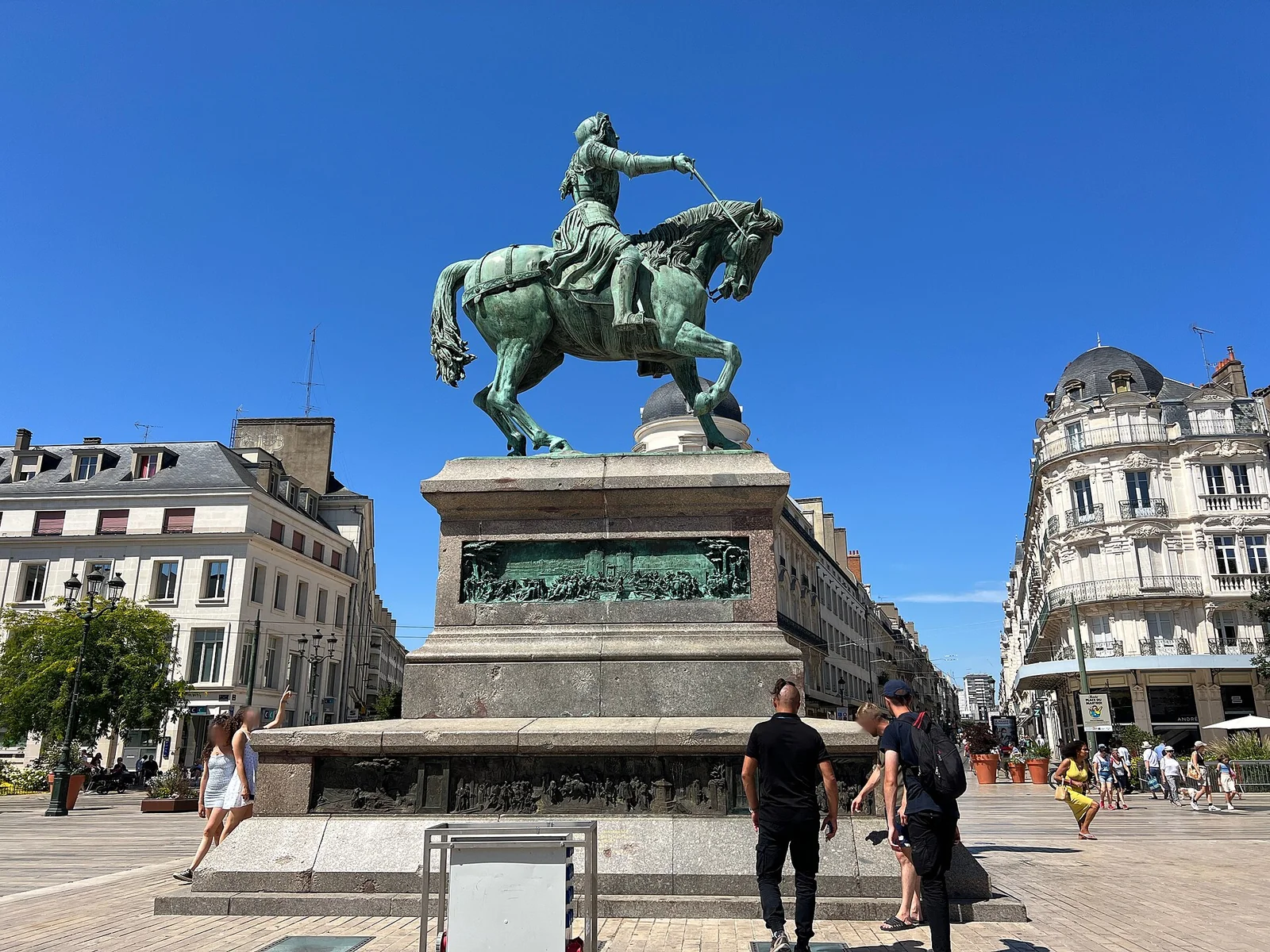
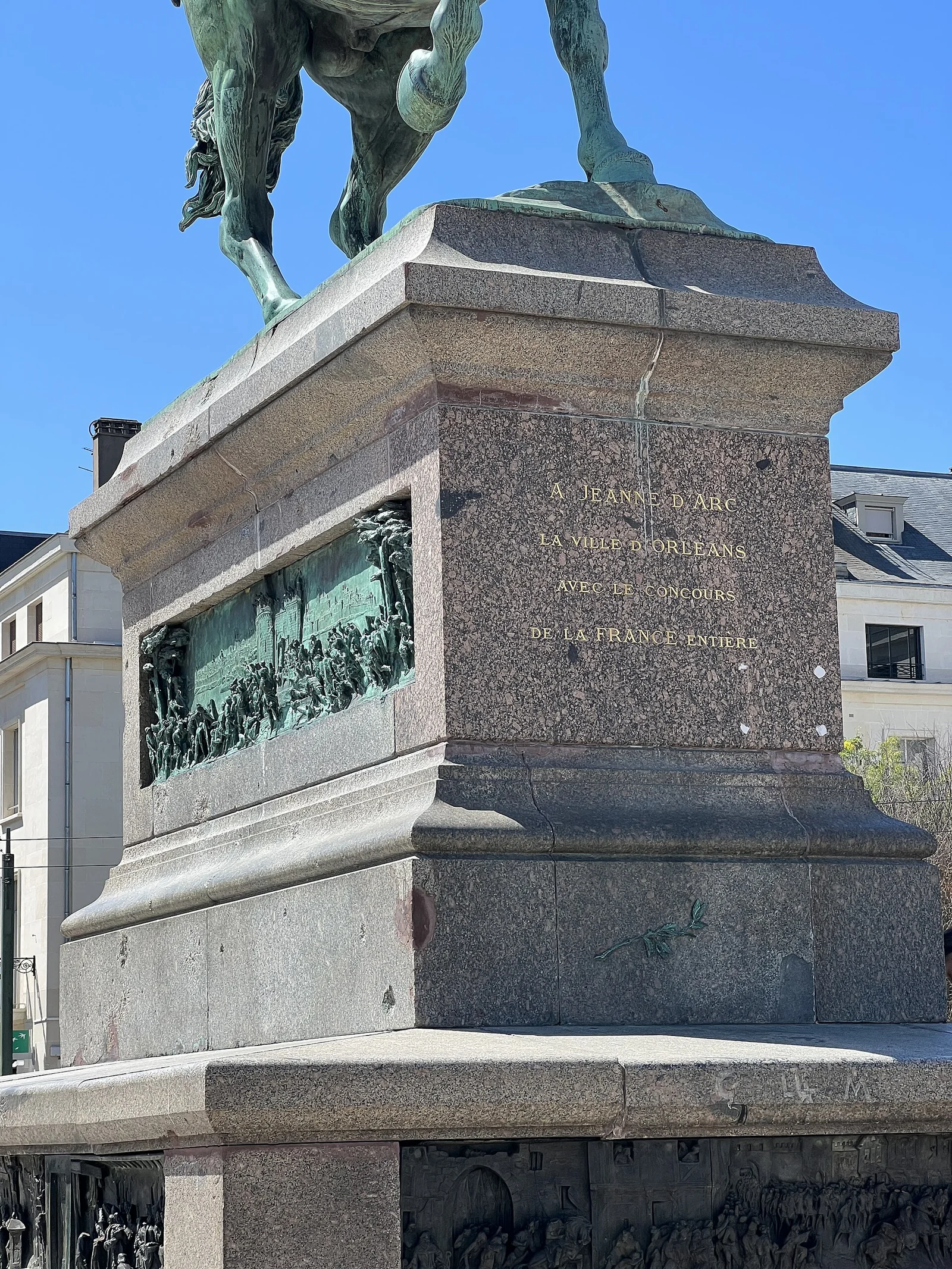
At Place du Martroi, stand back to see how the equestrian statue organises the square. Then approach the pedestal without obstructing movement. Horse, armour, pose and reliefs create a monumental story: you are invited to recognise a heroic figure immediately. Yet this public presence belongs to a memory constructed centuries after the fifteenth-century events.
The municipal heritage document identifies Denis Foyatier’s equestrian statue at Martroi with 1855. An earlier statue by Edme Gois moved between locations. Those changes matter: urban memory is not a fixed set of objects. A city chooses where a monument stands, how large it should be and how it relates to ceremonies and ordinary life.
Compare an overall view with one detail of the base. With children, begin by asking what makes an equestrian monument different from a standing figure. With teenagers, discuss the effect of placing an artwork in the middle of a major square. The historical subject is old, but your immediate observation concerns a public artwork and the role it plays in a contemporary city.
5. Joan of Arc’s House: understand what you are entering
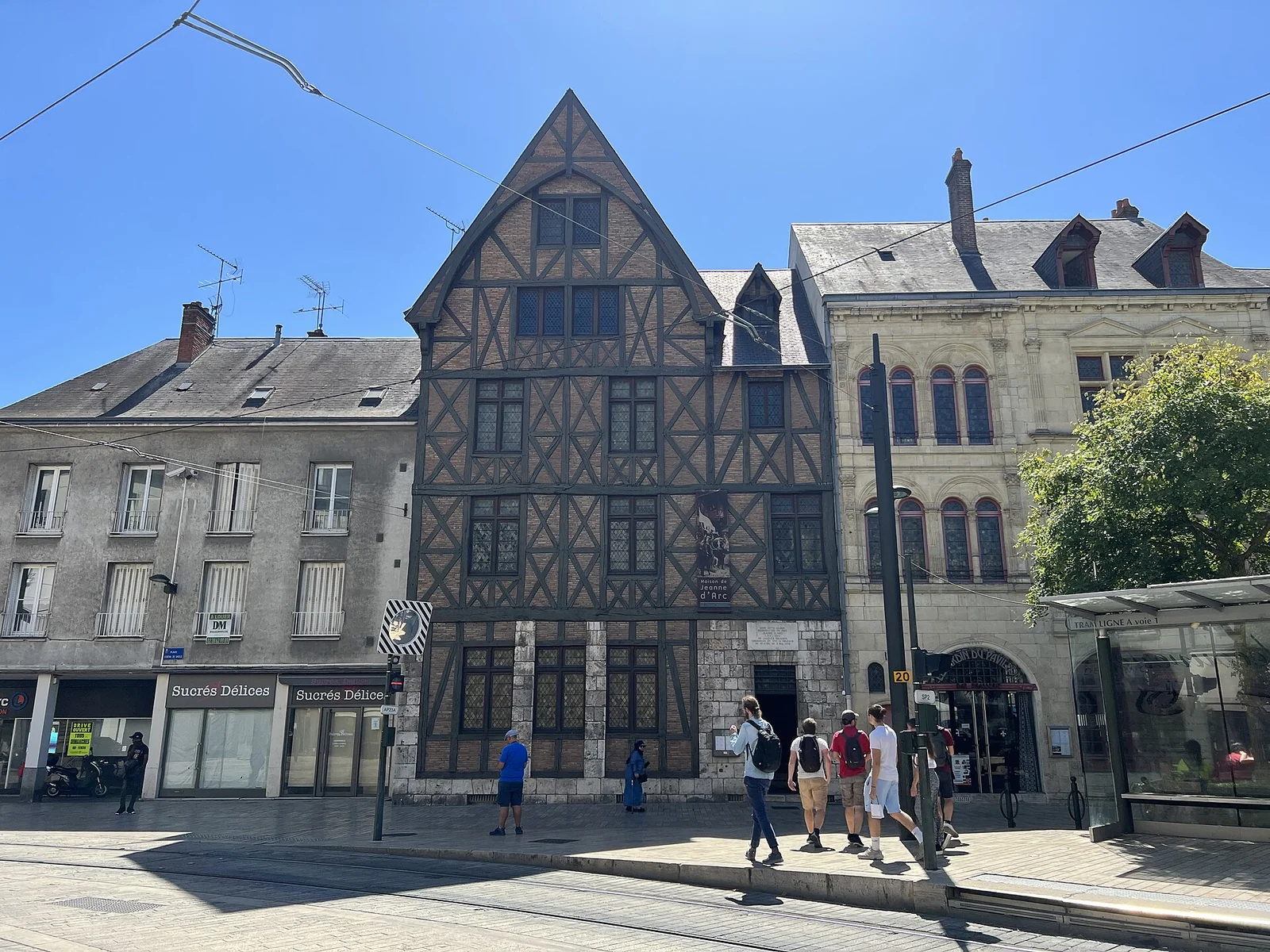
The House is at 3 Place du Général-de-Gaulle. Jacques Boucher’s historic home was destroyed in 1940, and the building now visible is a 1960s reconstruction. That fact does not remove its interest. It clarifies that today’s experience transmits and interprets history rather than presenting an untouched room from 1429.
The municipal page describes multimedia interpretation, maps, chronology and a panoramic film of about fifteen minutes. Screenings are advertised every half-hour. Allow a margin: a fifteen-minute film does not mean that you will enter, wait, read the introductory material and leave within fifteen minutes.
The research and documentation centre in the same complex operates differently, with consultation by appointment. Do not confuse an ordinary tourist visit with documentary research. For a specific project, contact the centre beforehand and explain the question you want to investigate. For most first-time visitors, the House is especially useful for organising the chronology before comparing the city’s statues and windows.
6. House opening hours, admission and exceptions
| Season or product | Published condition | Practical implication |
|---|---|---|
| 1 May–30 September | Tuesday–Sunday,10 am–1 pm and 2 pm–6 pm | Midday break |
| 1 October–30 April | Tuesday–Sunday,2 pm–6 pm | No ordinary morning opening |
| House only | € 4 | Different from the combined entry |
| Combined museum ticket | € 8 full or € 4 reduced | Valid for one day |
| First Sunday of the month | Free entry advertised | Check any separate event conditions |
Normal Monday closure is joined by the listed exceptions: 1 and 11 November,25 December,1 January,1 May and 14 July. 8 May has a special published opening from 10 am to 1 pm. A day important to Joan’s memory is therefore not necessarily an ordinary museum day with the usual afternoon access.
Reduced admission depends on eligibility and evidence. Groups and programmed events may have separate arrangements. Follow the city page to the official museum ticket office, select the correct product and read the ticket’s validity before payment. Buying the combined ticket only makes sense if the places you intend to enter are open within its valid day.
7. Sainte-Croix: compare the story with stained glass
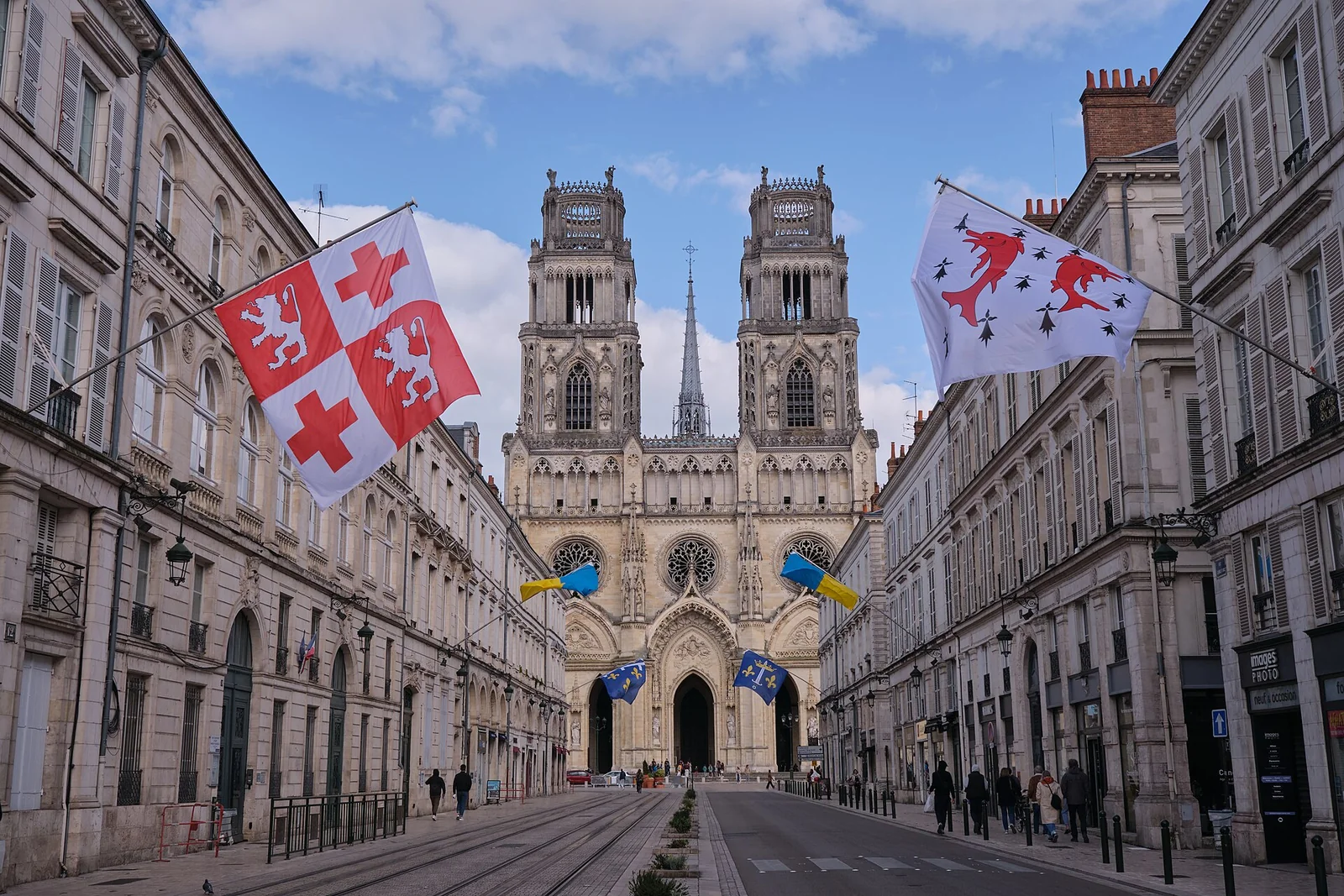
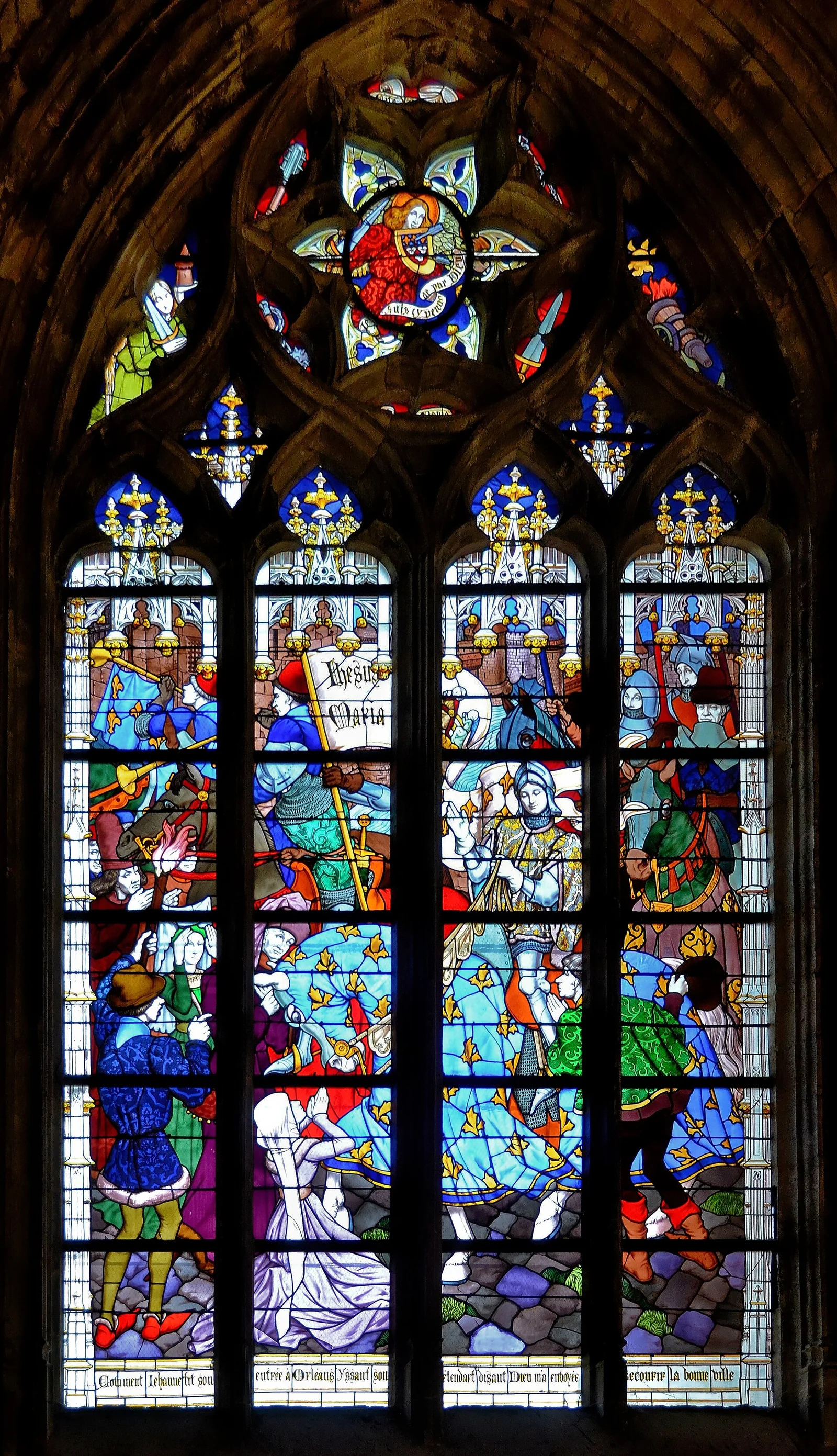
The cathedral offers a different kind of interpretation from the museum. The lower-aisle windows tell Joan’s life inside a working church and through a luminous visual narrative. Download the official leaflet for the ten windows so that you can identify episodes rather than relying on an armour detail or an image previously seen on social media.
Choose one scene and notice gestures, faces, accessories and Joan’s position in the composition. Then compare it with the Martroi statue. Is the figure acting in the same way? Are you being asked to admire, understand or pray? Such questions prevent the artworks from becoming interchangeable illustrations of one old event.
Ordinary entry is free. The rectorate gives daily opening from 9 am to 6 pm in November–March and until 7 pm in April–October. Respect worship and reserved spaces. For a deeper route or a separately organised climb, use the complete cathedral guide rather than assuming that an upper-level visit can simply be added on arrival.
8. Hôtel Groslot: another image of Joan
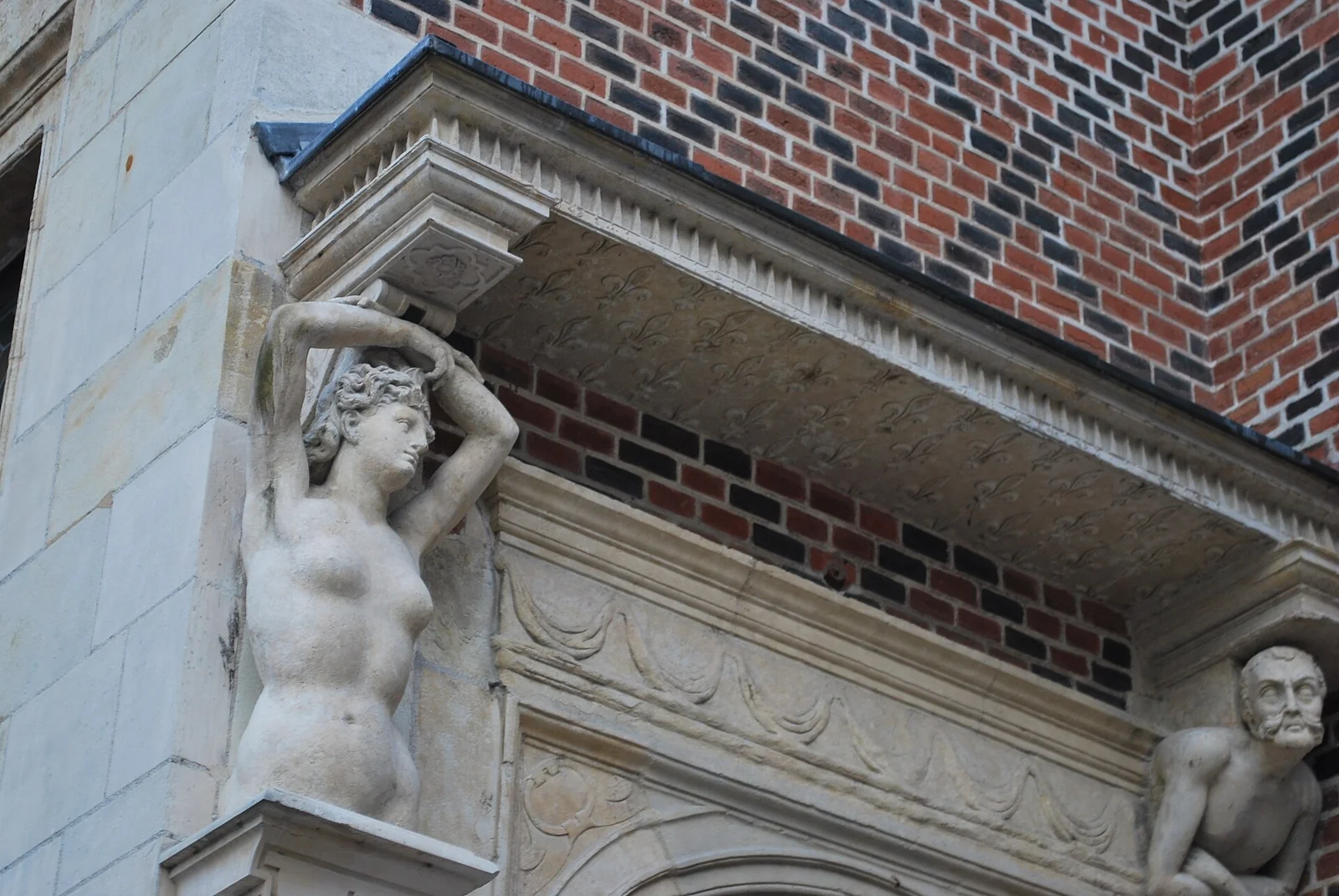
Hôtel Groslot lets you compare Martroi’s heroic public figure with a more reflective representation. The sculpture associated with Marie d’Orléans, identified in heritage and tourism material, belongs to a different visual mood from the equestrian monument. Look at posture and expression before trying to assign the work one simple label.
The setting matters too. A sculpture at a Renaissance mansion is perceived differently from a monument in a large open square. Steps, brick façade and the scale of the surrounding space create another relationship with the viewer. Photograph the two settings in a comparable way: an overall view followed by a detail. You can then see how the city presents several Joans rather than one image repeated everywhere.
If the historic rooms are available, extend the visit, but remember that Groslot is also used for ceremonies. Free ordinary visiting does not guarantee every room is open at every hour. The Hôtel Groslot guide explains how to combine façade, accessible rooms and garden without making the day depend on an interior that may be restricted.
9. Loire and Tourelles: recover the geography of the siege
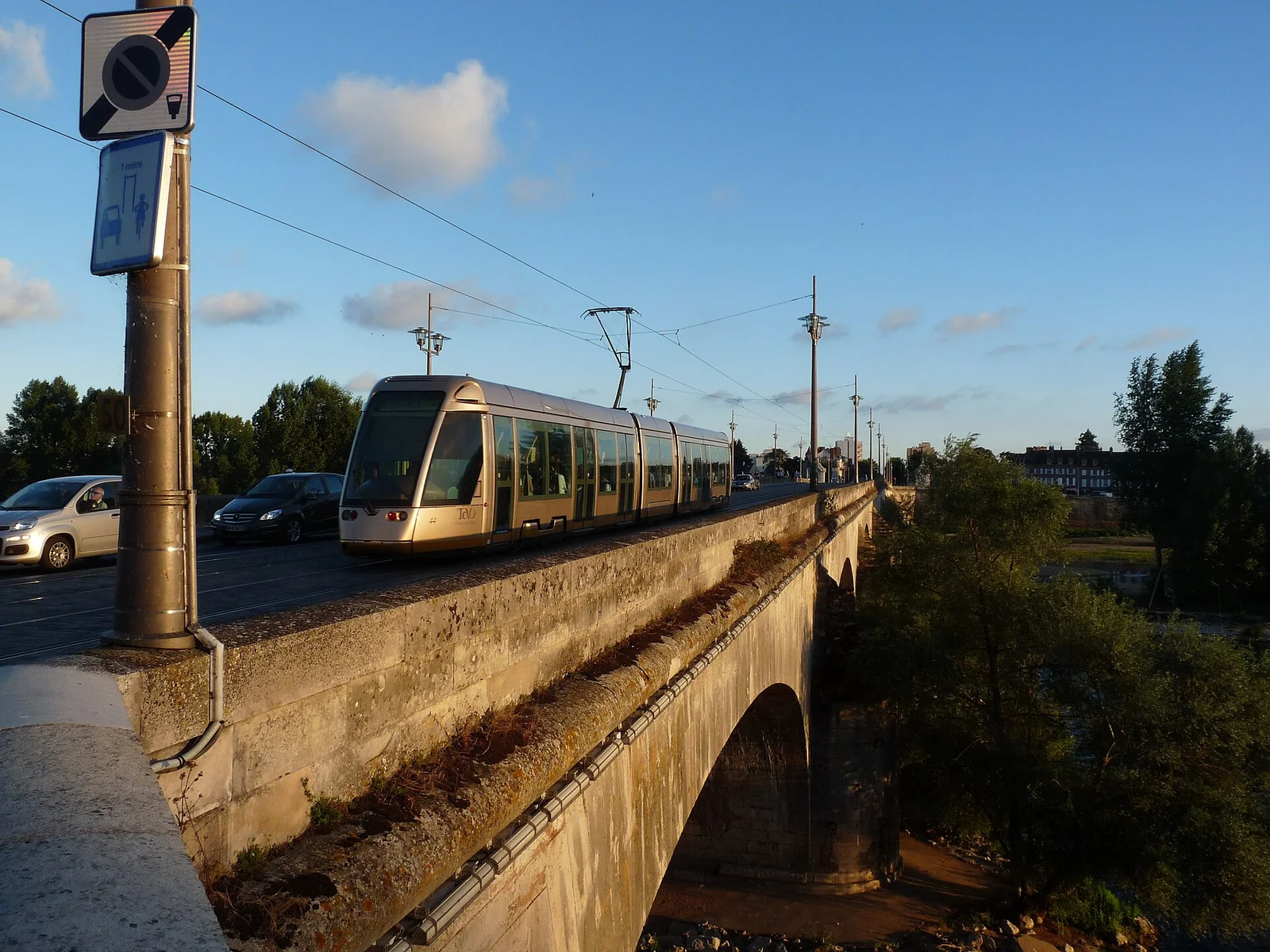
Walking to the river makes the military story more concrete. Look at the banks, the crossing and the relationship between the centre and the bridge approaches. Do not imagine that the present George V Bridge is the bridge of 1429. Modern landmarks help with orientation but do not reproduce the fifteenth-century layout exactly.
If continuing towards the Tourelles area, follow the heritage plan and authorised paths. This should remain an urban walk, not a hunt for ruins at the water’s edge. River levels, low accesses and crossing conditions change. In rain or with a tired group, reading the landscape from the central bank can provide enough context to understand why the Loire mattered.
The Loire riverbanks guide sets out walking options and practical precautions. Add a break before returning to the centre. Historical reconstruction benefits from looking at the real landscape, but it also requires accepting change: modern infrastructure, riverbank works and everyday movement belong to the city you are visiting now.
10. Museums and documents: deepen the theme selectively
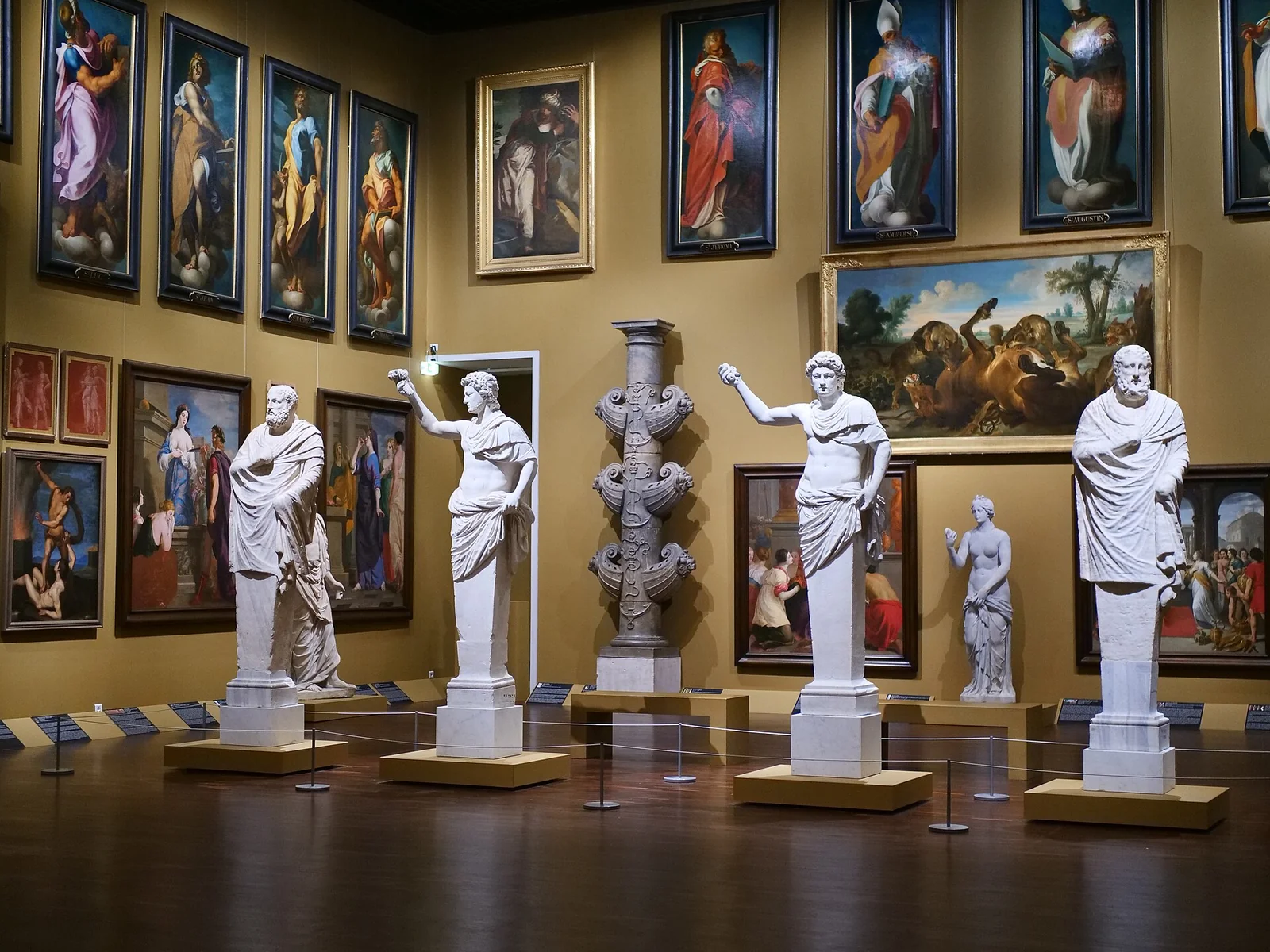
The Museum of Fine Arts and other municipal institutions can extend the route through artworks or documents related to Joan. Displays are not fixed inventories. A work described in a publication may be in storage, on loan or shown in another context. Ask what is visible during your visit and build a real route rather than searching for a list copied from an older exhibition.
If images interest you, compare a public sculpture, a stained-glass scene and a museum work. If history is the priority, explore the difference between a contemporary document, a copy and a later interpretation. The Museum of Fine Arts guide helps organise that stage without turning a theme day into a sequence of rushed admissions.
For deeper work, archives and the Joan of Arc research centre have their own procedures. A consultation begins with a question, contact with the service and an understanding of access conditions. It is not an improvised replacement for a coffee break. Knowing that these resources exist helps a traveller distinguish public interpretation from specialised documentary investigation.
11. The Joan of Arc celebrations: a living annual programme
The celebrations bring together civic ceremony, religion, military memory, entertainment and cultural activities. The municipal programme is the place to check times and access. At the November 2026 check it still presents the 2026 edition. Those events must not be copied as an assured schedule for 2027.
If travelling specifically for the celebrations, wait for the relevant edition before booking an activity around an assumed ceremony time. Check movement restrictions, gathering areas and the operation of nearby visitor sites. A major event can slow a crossing or alter ordinary visiting conditions at the cathedral and other buildings on the route.
With children or someone who tires easily, choose one main moment and identify an easy way to leave. You do not need a front-row position at every event to understand the celebrations’ role. Outside the festival period, the route remains worthwhile: monuments, windows and documents explain the city’s commemorative life without depending on a special performance.
12. The suggested circuit and map references
- Place du Martroi: equestrian statue and public commemoration.
- Rue Jeanne-d’Arc: the city’s approach to Sainte-Croix.
- Cathedral: windows and publicly accessible spaces, subject to worship.
- Hôtel Groslot: a different sculptural representation.
- Joan of Arc’s House: multimedia interpretation during its open period.
- Loire quays: river geography and an optional Tourelles extension.
This is a practical visiting circuit, not a reconstruction of one of Joan’s exact days in 1429. Reverse it to suit House opening, a booking or the group’s pace. Save the places on a map: Martroi, the House, Groslot and Quai du Fort-des-Tourelles.
🗺️ Your planning map
Load the map when you need it, or open directions directly. Loading the map connects to Google Maps.
Open in Google Maps ↗Keep bridge crossings and quays as comfort-based choices. If conditions are poor, shorten the loop and finish centrally. First-time visitors can combine the theme with the general three-day itinerary rather than stacking two complete routes into one day and repeatedly passing the same places without time to look.
13. Budget and booking: pay for the experience you need
Outdoor walking and ordinary cathedral entry already provide a rich visit without admission spending. The House is separate, while the combined museum ticket may suit several entries on its valid day. A guided city walk is another product again, with its own language, length and meeting point.
Choose the stages first, check their hours next and compare tickets last. Buying a package before deciding what matters can make the day revolve around “getting value” rather than enjoying the theme. Keep evidence of any discount and read cancellation conditions before paying. The existence of a reduced category does not mean everyone in a group is entitled to it.
Allow for a proper pause in both budget and schedule. Central food options vary in kitchen hours and weekly closures. The Orléans food guide helps with the area and type of meal. Reading the actual menu before sitting down avoids surprises over supplements or a formula available only on particular days.
14. Families and mobility needs
For a family visit, keep three questions: what does the image show, when was it made, and where did the event actually happen? A statue, a window and the House can create a coherent day. Add regular pauses and avoid a long standing explanation at every stop. Official educational resources offer useful ideas, but they still need adapting to the group’s age and attention.
Mobility conditions differ between a square, a museum interior, a historic mansion and a quay. Ask about adapted entrances, thresholds and areas currently accessible. Close places on a map may still be separated by cobbles or gradients. For a simpler route, keep the central stages and omit the river extension rather than finding yourself committed to a difficult return.
In rain, alternate the House and cathedral according to their actual welcome arrangements. During heat, shorten exposed stops and carry water. The route should remain an invitation to understand the city, not a competition to collect the highest number of Joan of Arc photographs.
15. How to read history without losing the pleasure of the walk
A useful distinction is between evidence and interpretation. A document made near an event, an artwork produced centuries later and a modern historical film can all be valuable, but they answer different questions. One may reveal the language used at the time; another reveals how a later period wished to remember Joan; the film organises material for a present audience.
You can use that distinction without turning the visit into a classroom exercise. At each stop, choose one detail that changes your understanding. Perhaps a modern reconstruction explains why a house looks different from the idea of a medieval survivor. Perhaps the position of a statue tells you more about public ceremony than about a battlefield. Those small discoveries make the circuit memorable.
When taking notes or sharing pictures, name the object accurately. “Joan of Arc window at Sainte-Croix” is more informative than suggesting you have found a portrait from 1429. If you do not know a date or author, leave the claim open until you can check it. Accurate captions can remain lively and interesting without adding certainty that the visit did not provide.
16. Common mistakes and a departure checklist
- ⚠️ Treating the present House as an untouched fifteenth-century interior.
- ⚠️ Confusing George V Bridge with the crossing used in 1429.
- ⚠️ Giving every statue the same date and purpose.
- ⚠️ Copying an old celebrations programme into a future year.
- ⚠️ Arriving at the House on a low-season morning without checking.
- ⚠️ Buying a combined ticket without its same-day condition in mind.
Save the map and indoor opening hours before leaving. Download the window leaflet if you want a careful cathedral visit. Leave time for the House screening and an outdoor substitute if admission is unavailable. Look at the city between monuments too: street names, small details and everyday uses show how historical memory continues within contemporary life.
For an accompanied tour, ask how much of the route is actually indoors. A “footsteps” walk may focus on public monuments, while a museum ticket offers a different kind of interpretation. Confirm language, meeting point and late-arrival rules. A shorter tour in a language you understand can be more valuable than a long one whose explanations are difficult to follow.
17. If this is your arrival or departure day
Keep the route closest to your accommodation and station arrangements. Store large bags before entering historic buildings where they may be inconvenient or subject to restrictions. For an arrival before the House opens in low season, use Martroi, the cathedral exterior and a relaxed meal first. Do not wait outside a closed door simply because it was first on a saved list.
On departure day, choose the central version and leave the river extension optional. Calculate the time needed to collect luggage and reach the exact station printed on your ticket. Orléans and Les Aubrais are different stations, so a general map pin labelled with the city name is not enough. Check the current journey with the official rail and TAO planners rather than guessing from a previous visit.
For visitors who do not speak French comfortably, ask which languages are available in the House’s current interpretation and in any guided product. An image-led visit can still work well, especially with the chronology prepared beforehand, but do not assume every projection or live explanation is multilingual. Save key names and addresses in French even when reading this English guide: it makes signs, maps and questions at reception easier to match.
18. Official sources and further reading
- City: House history, admission and opening.
- City heritage service: Focus Jeanne d’Arc.
- Cathedral: window leaflet.
- Annual celebrations programme.
- Ministry of Justice: Joan’s trial.
- Official museum ticketing.
Checked on 10 November 2026. Route lengths and suggested times are editorial recommendations; admission prices, opening and service conditions are controlled by the relevant organisations.
Frequently asked questions
Is the present House the building from 1429?
It is a 1960s reconstruction following destruction in 1940. It recalls Jacques Boucher’s home, where Joan stayed.
What does the House cost?
The city lists€ 4 for the House alone. The four-museum combined ticket is€ 8 full or€ 4 reduced and valid for one day.
When does it open in November?
Low-season public hours are Tuesday–Sunday,2 pm–6 pm, from 1 October to 30 April. Mondays and listed holidays including 11 November are closed.
Can I follow the route free of charge?
Yes for the outdoor monuments and ordinary cathedral entry. The House, other museums or a guided tour may require a ticket.
Must I follow the stops in this order?
No. Reverse or adjust the practical circuit according to House hours, services and the group’s pace.
Do the celebrations always have the same programme?
No. The tradition is annual, but detailed dates, times and access must be checked for the relevant edition.
Is George V Bridge Joan’s bridge?
No. The present bridge is later than 1429. It helps orientate the landscape but is not the intact siege crossing.
How long should I allow?
An outdoor version may take about 90 minutes with stops. For the House, cathedral and a break, allow a half-day or more.